
a book
The Dictator's Handbook
Alastair Smith & Bruce de Mesquita · 2011 · 400 pages
Bruce Bueno de Mesquita and Alastair Smith's canonical book on political science turned conventional wisdom on its head. They started from a single assertion: leaders do whatever keeps them in power. They don't care about the "national interest"-or even their subjects-unless they must.
Newly updated to reflect the global rise of authoritarianism, this clever and accessible book illustrates how leaders amass and retain power. As Bueno de Mesquita and Smith show, democracy is essentially just a convenient fiction. Governments do not differ in kind, but only in the number of essential supporters or backs that need scratching. The size of this group determines almost everything about politics: what leaders can get away with, and the quality of life or misery under them. And it is also the key to returning power to the people.


recommended by 4 people
sourced from public statements

Andrej Karpathy
“This book examines positions of power (e.g. country leadership, mayors, CEOs, deans, etc.) by assuming entirely self-interested actors who seek to gain and retain power, and argues through examples that this relatively simple model gives the first order explanation of many world events. If you really grasp the message you'll adopt a much more cynical world view, but you'll also stop torturing yourself over stupid questions like what a country "ought" to do, what is "right", or why the people in power just can't see it. At the same time, spending some time in reality will reveal ways of remedying various suboptimal situations (e.g. the inefficacy of foreign aid) with solutions that recognize the root cause and manipulate incentive structures of those in power. The book supplements its thesis with various examples. For instance, resource-rich autocracies with small winning coalitions tend to oppress the population, which is irrelevant to the revenue needed to retain power. Conversely, there exists a curious tension in countries that cannot extract riches from the ground and instead rely on a productive population to generate wealth. This leads to the development of technologies that empower people, such as better communication networks, transportation infrastructure, education, etc., but these in turn pose a threat to those in power. There is also an element of "survival of the fittest" to systems with small winning coalitions, where even if a benevolent leader rises to power who wants to raise the standard of living for the masses, they are likely to become replaced by those who promise to redirect that wealth to the key supporters (e.g. those in charge of the police, military, treasury, etc.). A coup is significantly easier if these institutions turn a blind eye. The outlooks are somewhat better for an average person living in a democracy, because the incentives of the ruler are aligned with making the average person better off to win a re-election. In short, to understand the dynamics of a system of power the first order features to consider are 1) the nominal electorate (people who theoretically have influence), or the "interchangeables", 2) the real selectorate (the people who actually have the influence), or the "influentials" and 3) the winning coalition (the number of people required to keep power), or the "essentials". You can then solve for the dynamics. My main critique of the book is that it is simply too damn long, too repetitive, and badly in need of an experienced editor. You'll hear the same statements re-iterated ad nauseam, and in many cases you'll wish the author was more concrete instead of arguing in generalities, at a level where the abstraction washes out the complexity and makes the conclusions self-evident under the simple model. Therefore, I'd recommend that the reader selectively skips through the book, or watch CGPGrey's summary video ( https://www.youtube.com/watch?v=rStL7...), or the EconTalk podcasts featuring the author (e.g. http://www.econtalk.org/archives/_fea...).”

Andreas Klinger
“FYI: what i read this year (following @vcstarterkit's rule) Bold the ones i would highly recommend. I switched to mainly listening to audiobooks and only "read" for entertainment. Hence mostly space scifi.”↗


books like The Dictator's Handbook
other books recommended by the same people who recommend this one

Dune
Frank Herbert
3 shared recommenders

Exhalation
and Stories Of Your Life by Ted Chiang
3 shared recommenders

A People's History of the United States
Howard Zinn
2 shared recommenders

A Short History of Nearly Everything
Bill Bryson
2 shared recommenders
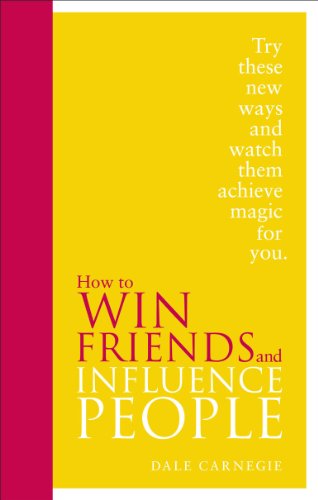
How to Win Friends and Influence People
Dale Carnegie, Robert Petkoff, Donna Dale Carnegie, Simon & Schuster Audio
2 shared recommenders

Narconomics
Tom Wainwright
2 shared recommenders

Seveneves
Neal Stephenson
2 shared recommenders

“Surely You’re Joking, Mr. Feynman!”: Adventures of a Curious Character
Richard P. Feynman
2 shared recommenders

We Are Legion
Dennis E. Taylor
2 shared recommenders

Debt: The First 5,000 Years
David Graeber
2 shared recommenders

Guns, Germs, and Steel
Jared Diamond
2 shared recommenders

High Output Management
Andrew S. Grove
2 shared recommenders